


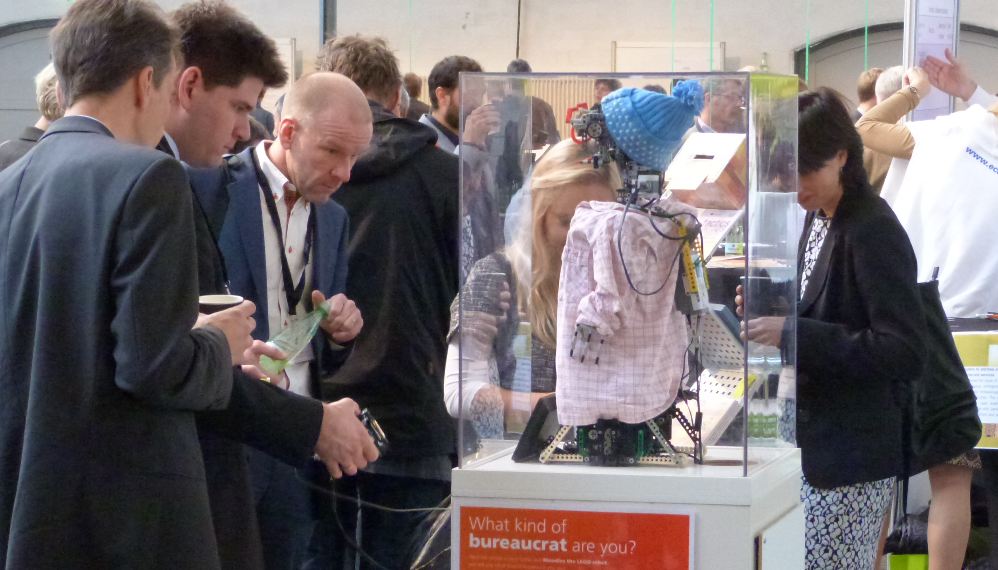
For the Innova 2012 conference, Moodles got new software so that it now detects what kind of bureaucrat you are ..
I defined 11 types of bureaucrat; you can read their characteristics below.
You get things done. Decision makers can count
on you for a swift, efficient, and thorough way
of handling matters. This is your way - and if
people are interested in other ways, they should
swing by someone else's desk. You keep your
superiors on a need-to-know basis, and they
might have a feeling that you don't always go
by the book; on the other hand, they keep coming
back to you. So you let them worry about the what
and the why as long as they let you worry about the how.

Example character: Dirty Harry


You have a mature sense of the greater good. This
enables you to take lightly the rules and regulations
threatening to obscure the overall goal. You see
procedure, process and protocol as hindrances, so
when you can, you liberate yourself and the people
you work with from the narrow-minded perspective
abundant in your organization and move things on in
a much more efficient, happy-go-lucky way.

Example character: Baloo the bear from Disney's 'The
Jungle Book'


To be quite honest, deep down you feel you are
somewhat overqualified for your job; your brilliance
and competences naturally put you in league with your
superiors rather than your current bureaucrat peers. This
fact is so evident that actually proving it is beneath
you - and you are naturally frustrated that not everyone
has yet acknowledged it. What is important to you,
therefore, is that everything concerning your dealings
signals 'perfection' when viewed from the outside. You
are perfect, and you don't allow this image to be disturbed
by irrelevant details such as your occasional mistakes or
misjudgements.

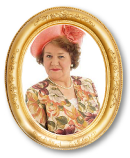
Example character: Hyacinth Bucket from the TV series
'Keeping Up Appearances'.


You are treasured for your trustworthiness, dedication,
and sense of duty. Your superiors know that when they ask
you to do something, you will do exactly what they ask
for unhesitatingly and efficiently. Experience has shown
you, however, that many of your assignments border on the
unpleasant, be it off-protocol, unethical, or simply
dangerous. Being the dependable person you are, you do the
job, but you have developed a certain skepticism toward new
initiatives.

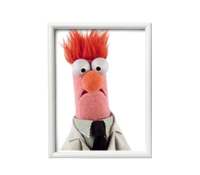
Example character: Beaker, assistant of Dr. Bunsen Honeydew
from the Muppet Show.


Your position comes with a certain level of power. The purpose
of you having this power is of course that you use it, and you
take great pride in fulfilling your purpose. Exerting no
influence - and thus being invisible - would effectively be
mocking the way your organization is structured, and naturally
you ould never dream of doing that. Since just passing on any
matter that crosses your desk with a 'yes' or 'approved' really
leaves you invisible, this is not how you usually do things.
Rather, you find some pleasure in doing your duty using labels
like 'no' and 'denied'.

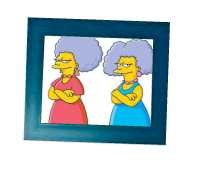
Example characters: Marge Simpson's sisters Patty and Selma from
the TV series 'The Simpsons'.


You are a really nice person. Your modest wish is to spot people
in need and help them as best you can. Very quickly, people gain
confidence in you due to your attentiveness, honesty, and, well,
good looks. It comes natural to you to be service minded, and if
being a tad flirtatious can make people happy and help them along,
then who are you to deny them? After all, your role in your
organization is all about smooth case handling.

Example character: Joey from the TV series 'Friends'.


You feel you are among the most responsible people in your organization.
Someone should always think ahead and expect the worst-case scenario,
and this someone is you. You take on all the worrying about what might
go wrong, and you know in your heart that you are the essential
stop-and-think'er in any process. The decision makers may have the
wild ideas and run off with all the credit, but really it is you who
make sure they stay alert along the way by pointing out the inherent
dangers of their less than thought-through plans.

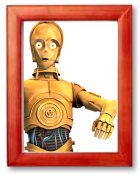
Example character: C-3PO from 'Star Wars'.


You are a reliable resource in your organization. Decision makers can
trust you with all kinds of tasks and you will see to it that they are
done, be it simple tasks, complicated tasks, or meaningless tasks. In
fact, your sense of meaning may be challenged a bit by the wealth of
matters of less than obvious real-world importance flowing by your desk.
However, you reckon that purpose is a perk, not a prerogative, and
there's always some paperwork to do to stop you from worrying about purpose.

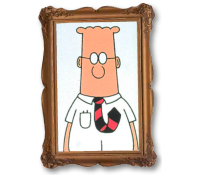
Example character: Dilbert.


You understand the system. You know what is best for your organization,
and you know best how to get there. In fact, you don't need your superiors
to tell you. Most often, decision makers are merely a nuisance whose
bewildered ideas should be listened to and carefully acknowledged and then
discreetly disregarded. Thus, you have developed fantastic skills in
listening to absurd visions, looking like you understand and even share them,
and then later, if necessary, explaining why bureaucratic barriers must be
blamed for the lack of progress in the matter. Thus, you graciously let
the 'decision makers' stay in the illusion that they are in power, while
in reality, you are.

Example character: Sir Humphrey Appleby from the TV series 'Yes, Minister'.


You prefer to do things by the book. In fact, you can be quite zealous when
it comes to following procedure. If things were not done according to the
rules, the result would be anarchy, chaos, and inefficiency, and the world
as we know it would be at stake. Having a correct way of doing everything -
protocol - is the skeleton that keeps your organization upright, and being
a true bastion of protocol, you consider yourself a cornerstone in the
success of your organization.

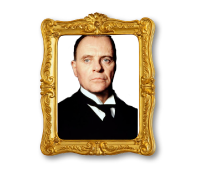
Example character: Mr. Stevens, the butler from the movie 'The Remains of
the Day'.


Loyalty is the most prominent of your virtues. Your role in your organization
is extremely important, since it is you who put into effect the visions and
wishes of your superiors. You tend to think that any questions should be
asked on the levels above you, leaving you to do your job. And your job is to
implement the will of your superiors as best you can, sometimes adding that
little extra which proves you're the most reliable resource at your superior's
disposal.

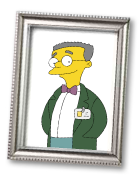
Example character: Waylon J. Smithers, Jr., from the TV series 'The Simpsons'.
Back to main page.